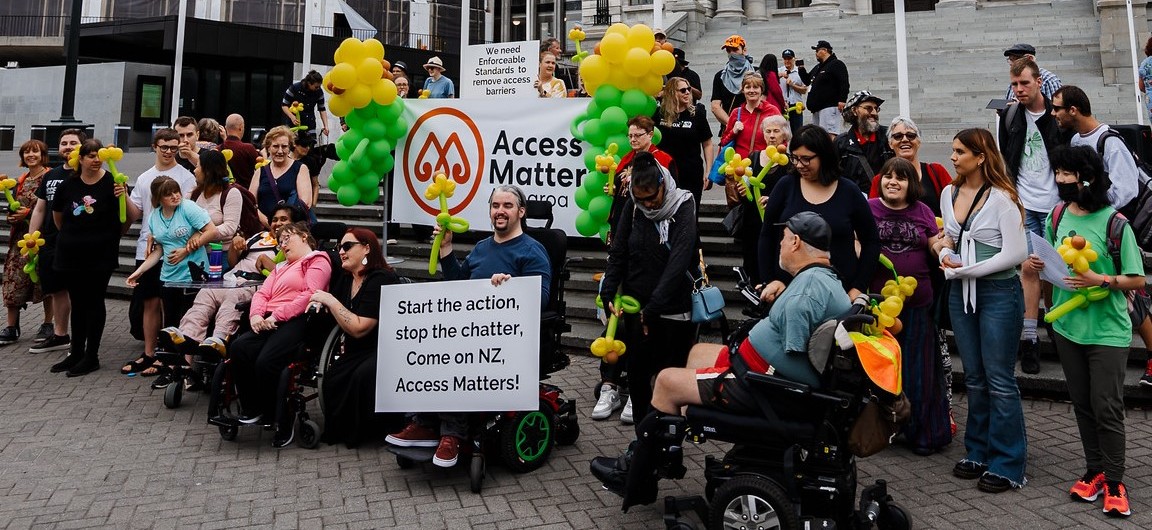
Every New Zealander should be able to learn, work, travel, and take part in community and whānau life with dignity and freedom. Public spaces, workplaces, healthcare, and education should be open to everyone.
But right now, many disabled people are shut out by barriers that shouldn’t exist — doors that are hard to open, videos without captions, classrooms without sensory supports, and online systems that don’t work with assistive tech. These barriers also affect older people, parents with prams, and people recovering from injury:
-
A Deaf commuter and a parent tending to a fussing baby miss their stop because the audio announcement is unclear and there’s no visual display.
-
A wheelchair user and a person using crutches can’t get into a café because the doorway is heavy and hard to open.
-
A blind person and an older adult can’t find the right room at the health centre because the signs are too small and low contrast.
These barriers aren’t inevitable. They exist because Aotearoa New Zealand doesn’t yet have clear, enforceable accessibility standards.
An accessibility Bill is a chance for all of us to help design access legislation that works. A strong accessibility Act will create long-term, systemic change by making accessibility the norm in workplaces, schools, transport, homes, and public spaces.
New Zealand helped shape the United Nations Convention on the Rights of Persons with Disabilities (UNCRPD), an international agreement that says disabled people should have the same rights and opportunities as everyone else. Now we have a chance to put those commitments into practice by building a future where everyone can participate fully.