Our History
Aotearoa New Zealand’s contemporary campaign for an accessibility law began in 2013 at the then Royal New Zealand Foundation of the Blind, when staff challenged a fundamental gap: why did New Zealand lack enforceable accessibility standards when comparable countries had them? This work led to the formation of the Access Alliance, a broad coalition of disabled people’s organisations, service providers, and advocates calling on political parties ahead of the 2017 election to commit to an accessibility law modelled on Canada’s emerging framework.
As Canada enacted the Accessible Canada Act in 2019, the New Zealand campaign expanded beyond vision impairment to address mobility, hearing, learning, digital access, and ageing, supported by commissioned economic research from the Blind Foundation (now Blind Low Vision NZ) through NZIER on the value of access to work and the gaps in disability employment, alongside legal research establishing the case for a comprehensive accessibility law framework. Despite a 2020 Government commitment to build the case for legislation, Cabinet resistance stalled progress.
The Accessibility for New Zealanders Bill was introduced and first read on 2 August 2022 and referred to the Social Services and Community Select Committee, but attracted strong criticism for lacking enforceable standards and was subsequently removed from Parliament without progressing further. In response, Access Matters Aotearoa was established in late 2022 to reset and strengthen the campaign, and in 2025 presented a petition to Parliament’s Petitions Committee calling for a new, robust Accessibility Bill, grounded in evidence, co-design, and lived experience.
Access Matters Aotearoa now leads sustained, evidence-based advocacy through:
-
petitions
-
research
-
public engagement
Working toward a co-designed accessibility Act that removes barriers across everyday life in Aotearoa New Zealand.
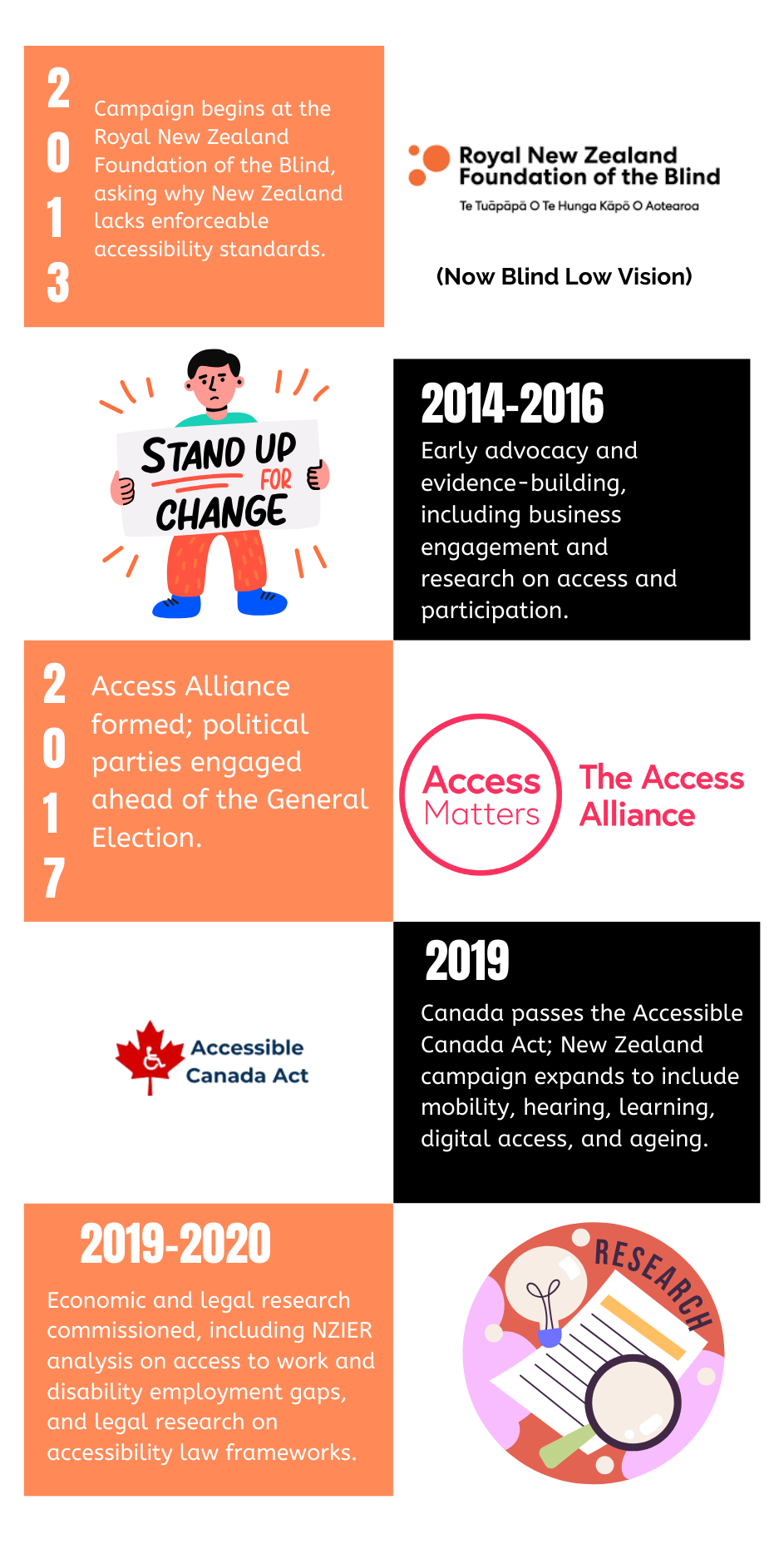
Key Campaign Milestones
2013
Campaign begins at the Royal New Zealand Foundation of the Blind, asking why New Zealand lacks enforceable accessibility standards.
2014 - 2016
Early advocacy and evidence-building, including business engagement and research on access and participation.
2017
Access Alliance formed; political parties engaged ahead of the General Election.
2019
Canada passes the Accessible Canada Act; New Zealand campaign expands to include mobility, hearing, learning, digital access, and ageing.
2019 - 2020
Economic and legal research commissioned, including NZIER analysis on access to work and disability employment gaps, and legal research on accessibility law frameworks.
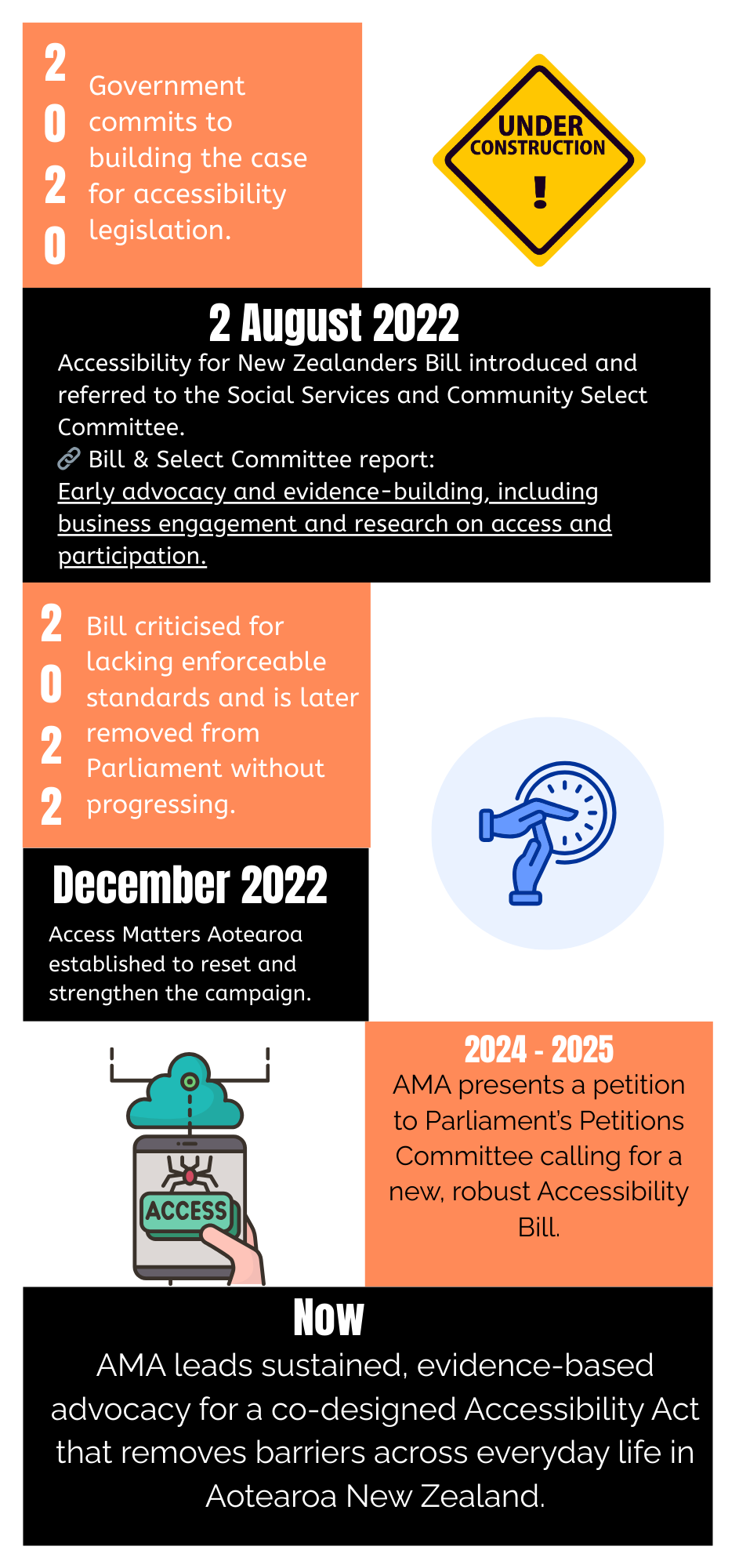
2020
Government commits to building the case for accessibility legislation.
2022 August
Accessibility for New Zealanders Bill introduced and referred to the Social Services and Community Select Committee.
2022 October
Bill criticised for lacking enforceable standards and is later removed from Parliament without progressing.
2022 December
Access Matters Aotearoa Trust established to reset and strengthen the campaign.
2024 - 2025
Access Matters Aotearoa presents a petition to Parliament’s Petitions Committee calling for a new, robust Accessibility Bill.
2026
Access Matters Aotearoa leads sustained, evidence-based advocacy for a co-designed Accessibility Act that removes barriers across everyday life in Aotearoa New Zealand.
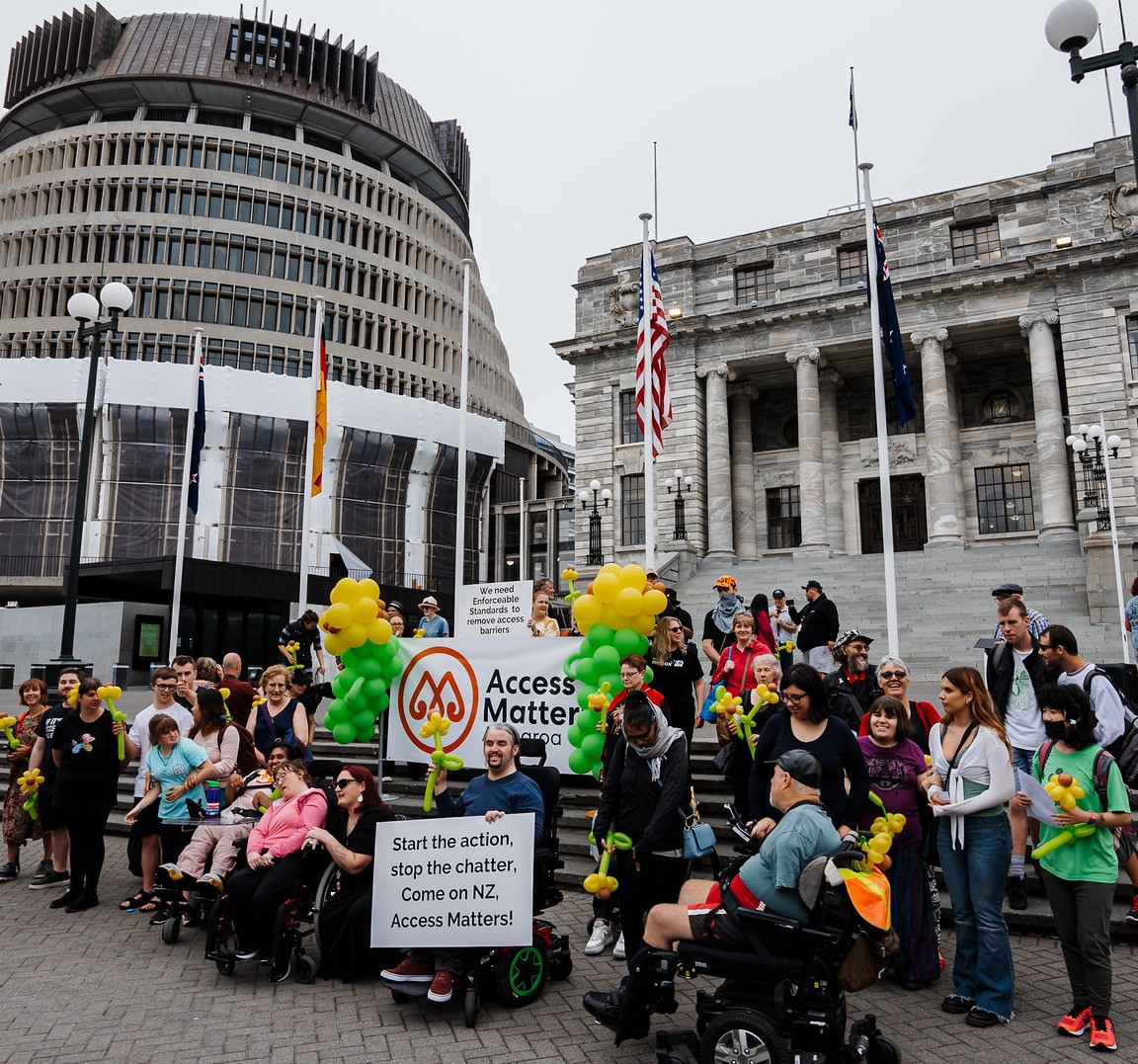
How to Get Involved
Everyone has a role in shaping an accessible Aotearoa New Zealand. Disabled people, tāngata whaikaha Māori, older New Zealanders, parents, whānau, allies, businesses, and community organisations all have a part to play in making access happen for everyone.
You can share your experiences of barriers, support the campaign, join in the consultation on the Bill, and encourage others to speak up.
Policymakers can help by listening closely, engaging early, and supporting strong, enforceable accessibility standards.
Help build an accessible Aotearoa New Zealand
Add your name to the campaign and stay connected as the Bill moves forward. Signing up means you’ll hear about upcoming actions, consultation dates, and ways to share your story.
Get involved today!